
Slate is not forgiving of poor workmanship. Unlike concrete tiles, which are relatively standardised in size, weight, and fixing method, natural slate varies considerably in its characteristics — and working with it correctly requires both knowledge and experience.
Slate has a natural grain. Natural slate must be fixed with the grain running in the correct direction — parallel to the shorter edge — to resist the freeze-thaw cycles that cause splitting along the grain. Slates fixed against the grain may look perfectly fine initially but split prematurely under frost pressure.
Nail placement is critical. Natural slates are fixed by nails through two holes punched near the head of the slate — the top edge — at a specific gauge from the tail. Fix the nails too low and the slates lift in wind. Fix them too high and water gets behind the slate above and runs down the nail hole into the batten below. Getting the gauge right for the pitch of the roof and the lap of the slates is a calculation that experienced slaters do automatically — and that inexperienced roofers frequently get wrong.
Matching matters more than most people realise. Natural slate varies in colour, texture, and size depending on its quarry of origin. Welsh blue-grey slate looks different to Spanish grey-black slate. Irish Killaloe slate has a distinctive greenish tint. Replacing slates on an existing roof with a poor match is visible from the road and devalues the property. The DJ Roofing team sources slates carefully to match the existing covering as closely as possible.
Lime mortar and cement behave differently on old slate roofs. Many Wicklow properties built before the 1950s were originally pointed and bedded with lime mortar — softer, more flexible, and more breathable than modern Portland cement. Applying hard cement mortar to a lime-mortared old slate roof causes cracking as the two materials move at different rates under thermal stress. The team uses the appropriate mortar specification for the age and construction of each roof.
I keep the process simple and transparent because that's what I'd want if someone was coming to work on my own home.
Replacing individual damaged, cracked, or missing slates is the most common slate roofing repair carried out across County Wicklow. Storm winds are the most frequent cause — a strong gust can lift slates that were previously secure, and once a slate slides out of position the slates above and below it become vulnerable. Impact damage from falling tree debris is another common culprit, particularly on rural Wicklow properties surrounded by mature trees.
The team replaces individual and multiple slates across Wicklow — sourcing a close match to the existing slate in colour, size, and texture, fixing correctly at the right gauge for the roof pitch, and checking the surrounding slates and underlining felt for any secondary damage caused by water ingress through the gap.
Where a small number of slates have failed on an otherwise sound roof, individual replacement is always the most cost-effective option. Where slate failures are scattered widely across the entire roof surface, it's a signal that something more systematic is happening — which brings us to nail sickness.
Nail sickness is the single most common reason for widespread slate failure on older Wicklow homes — and it's one of the most misunderstood roofing conditions the DJ Roofing team encounters. It's worth explaining properly.
When a slate roof is laid using iron or mild steel nails — standard practice on roofs built before the 1960s and common on many roofs built into the 1980s — those nails corrode over time. The corrosion is caused by the natural acidity of the slate itself in combination with moisture, and it happens regardless of how well the roof has been maintained. Once the nails corrode sufficiently, they can no longer grip the slate securely. The slates begin to slip — first a few, then progressively more as each slipped slate puts additional load and wind exposure on its neighbours.
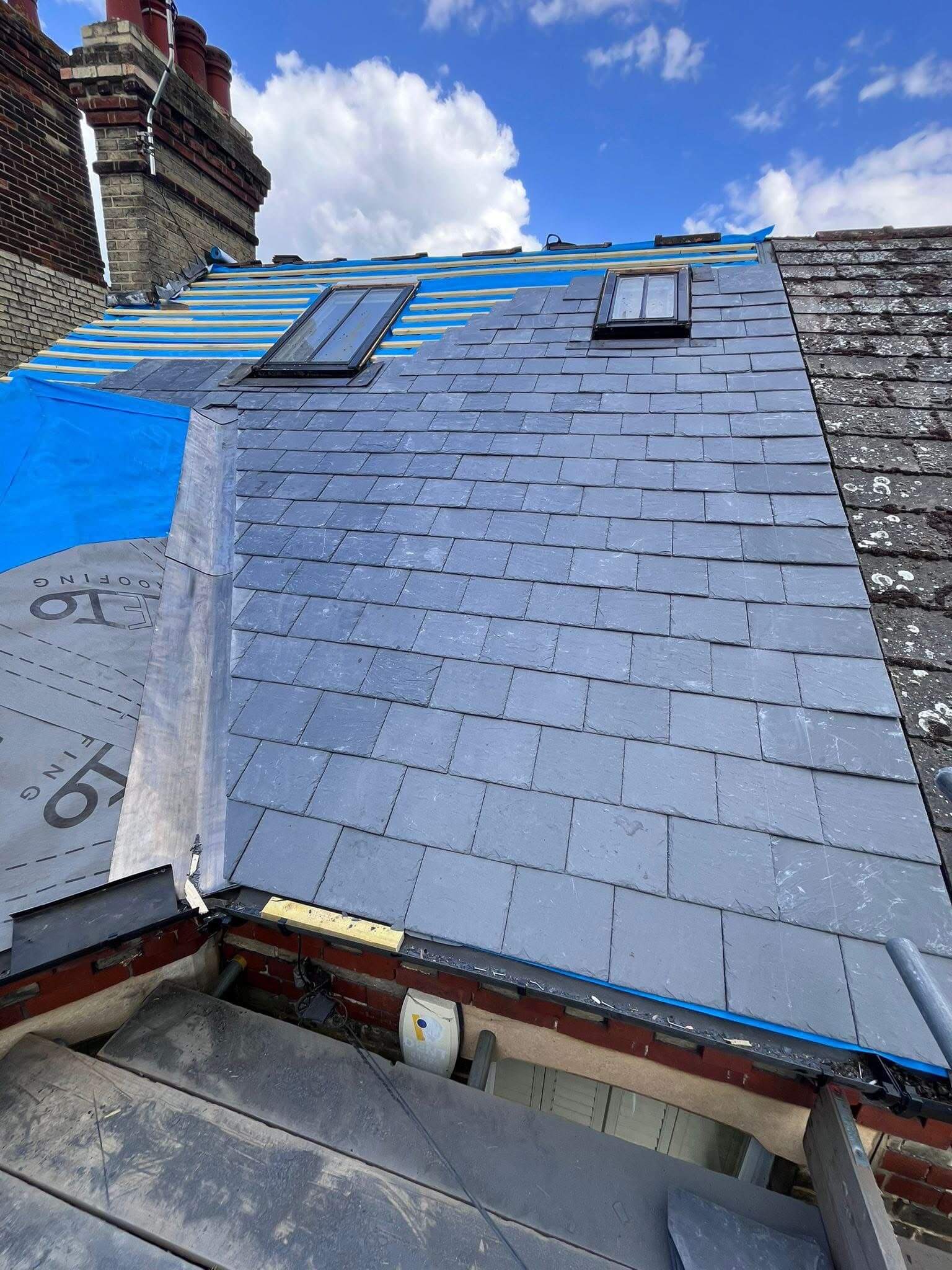
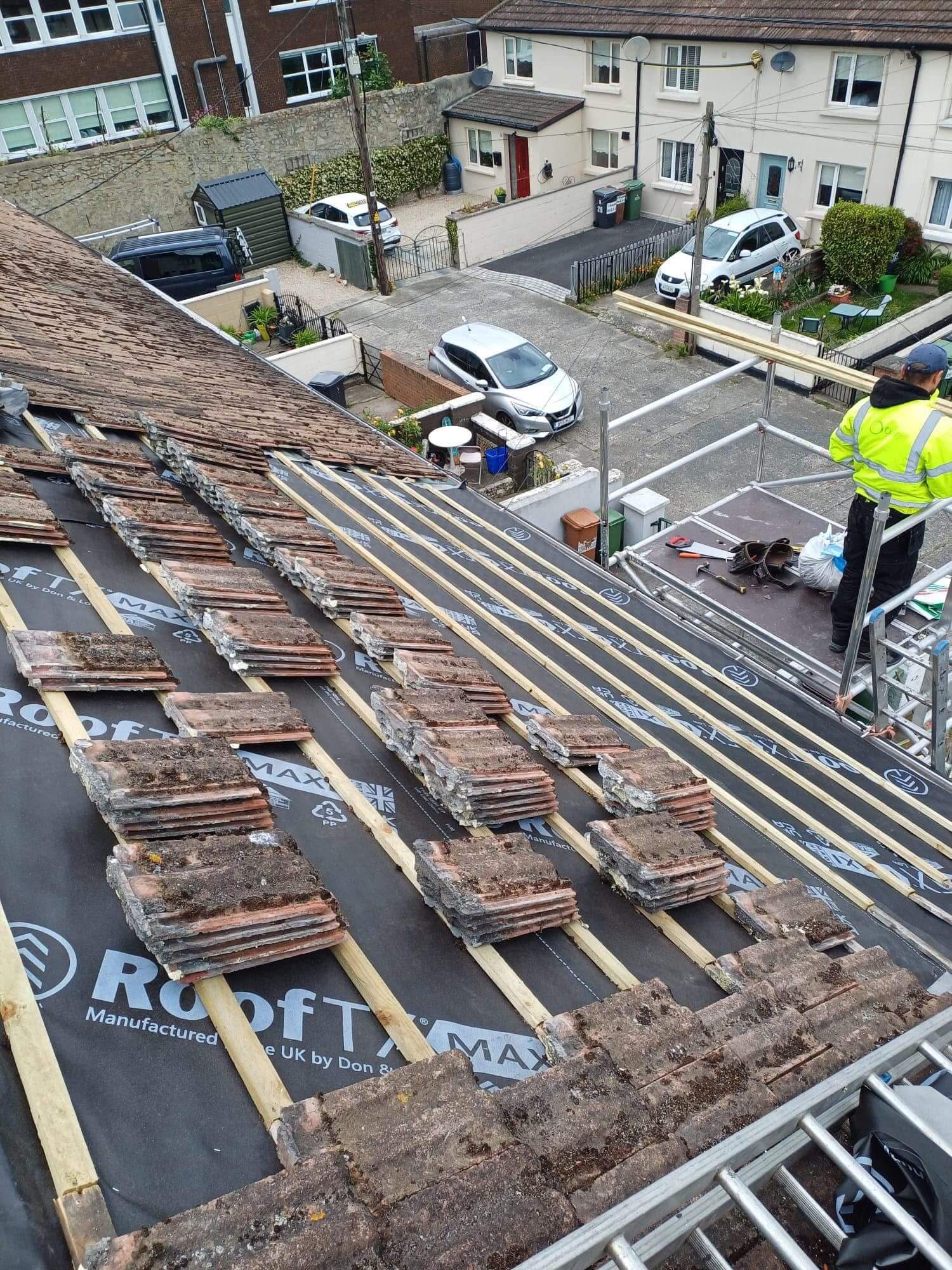
Nail sickness cannot be repaired by replacing individual slates — because the problem is not the slates themselves but the fixings holding every slate on the roof. A roof with significant nail sickness needs to be stripped and re-laid with new corrosion-resistant fixings. The team carries out full re-slating projects across Wicklow on roofs affected by nail sickness — stripping the old covering carefully, retaining salvageable original slates where possible, replacing the felt and battens, and re-laying using stainless steel or copper nails that will not corrode over the life of the roof.
On a property where nail sickness is developing but not yet widespread, the team will give an honest assessment of how much of the roof is affected and whether targeted remedial work can extend the roof's useful life, or whether a planned full re-slate is the better long-term approach.
The ridge tiles at the peak of a slate roof are bedded and pointed in mortar — and that mortar deteriorates over time, particularly on exposed Wicklow properties where freeze-thaw cycles attack it every winter. Cracked, hollow, or missing ridge mortar allows water into the ridge course and can allow individual ridge tiles to rock and eventually dislodge.
A loose or missing ridge tile on a slate roof is a more serious problem than it looks. Wind can get beneath an unsecured ridge tile, lifting it and the course of slates beneath it simultaneously. The team repoints and re-beds ridge tiles across Wicklow slate roofs using the appropriate mortar specification — ensuring a solid, weathertight ridge that won't need attention again for years.
Where a homeowner prefers a dry-fix ridge system — mechanically fixed ridge tiles that don't rely on mortar bedding and therefore don't suffer the same freeze-thaw deterioration — the team can advise on and install dry-fix ridge systems on both new and existing slate roofs.
The lead flashings on a slate roof — around chimneys, at abutments with walls, at dormers, and at valleys — are critical waterproofing junctions that require careful attention on any slate roof repair or maintenance job. On older Wicklow slate roofs, the original lead flashing may have been in place for 40, 50, or even 60 years, and while lead is an extremely durable material, it does eventually reach the end of its serviceable life.
Common failures include lifting at the step flashing along chimney sides as the mortar joint it's tucked into opens up, cracking at folds and steps where repeated thermal movement has fatigued the lead, and separation at the joint between the back gutter behind a chimney and the main roof surface.
The team repairs and replaces lead flashings on slate roofs across Wicklow — correctly dressed, properly tucked into mortar joints, and finished to allow the thermal movement that lead requires without cracking or lifting.
Roof valleys on slate properties — the channels where two roof slopes meet — carry large volumes of water and are one of the most common sources of persistent leaks on Wicklow homes. Traditional open lead valleys, mortar-bedded tile valleys, and closed cut valleys all have specific failure modes and require different repair approaches.
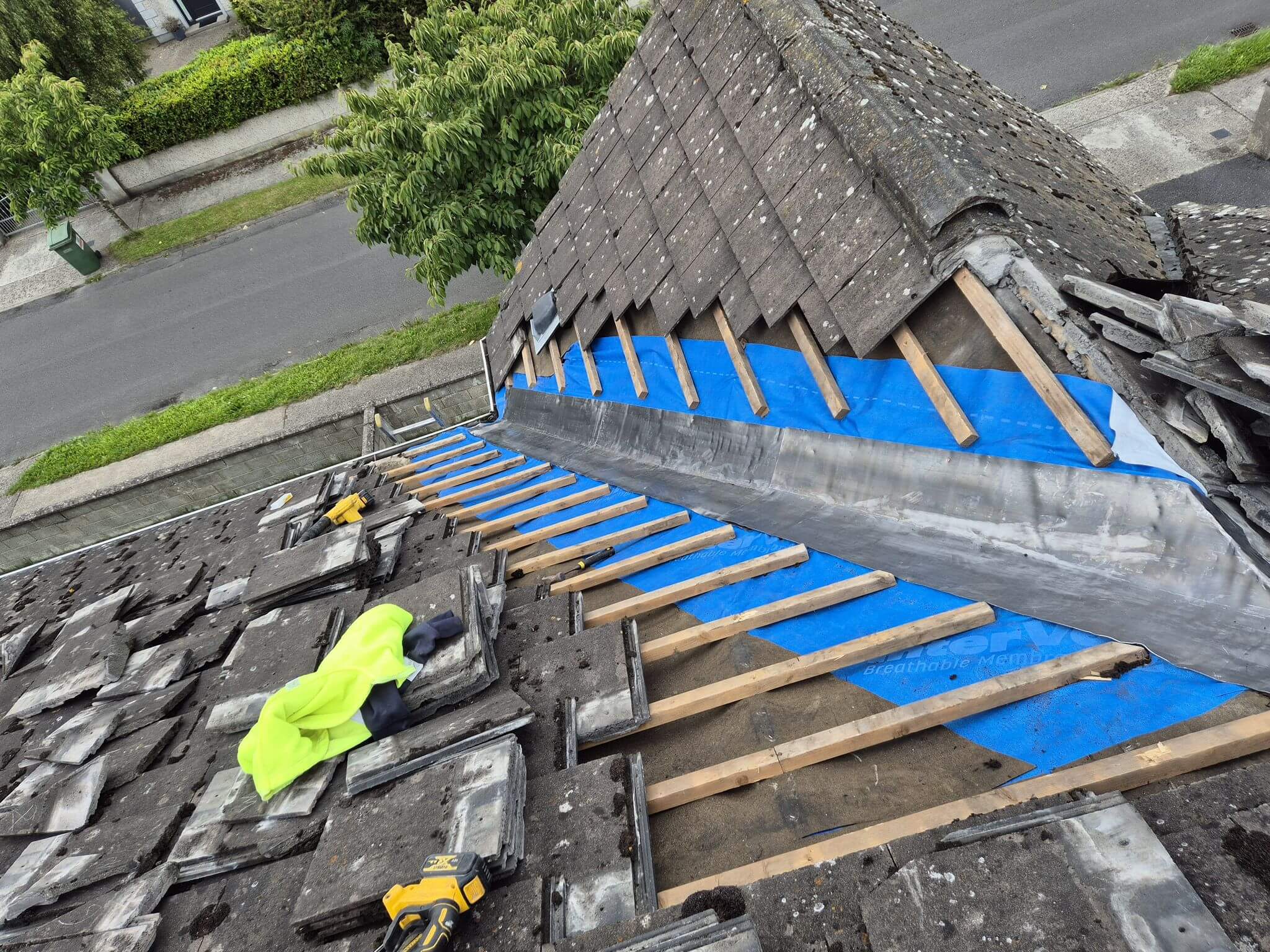
On period Wicklow properties, open lead valleys are the most common type — and the most common failure mode is the lead lifting at the laps, cracking under thermal movement, or simply reaching the end of its serviceable life after several decades. The team repairs and replaces lead valleys across Wicklow, correctly dressed and lapped to shed water cleanly down the valley and into the gutter below.
When a slate roof has reached the end of its serviceable life — through nail sickness, widespread felt failure, or simply the accumulated deterioration of a roof that is 60, 70, or 80 years old — a full re-slate is the right investment. Done properly, a re-slated roof on a Wicklow home should not need significant attention for another 40–50 years.
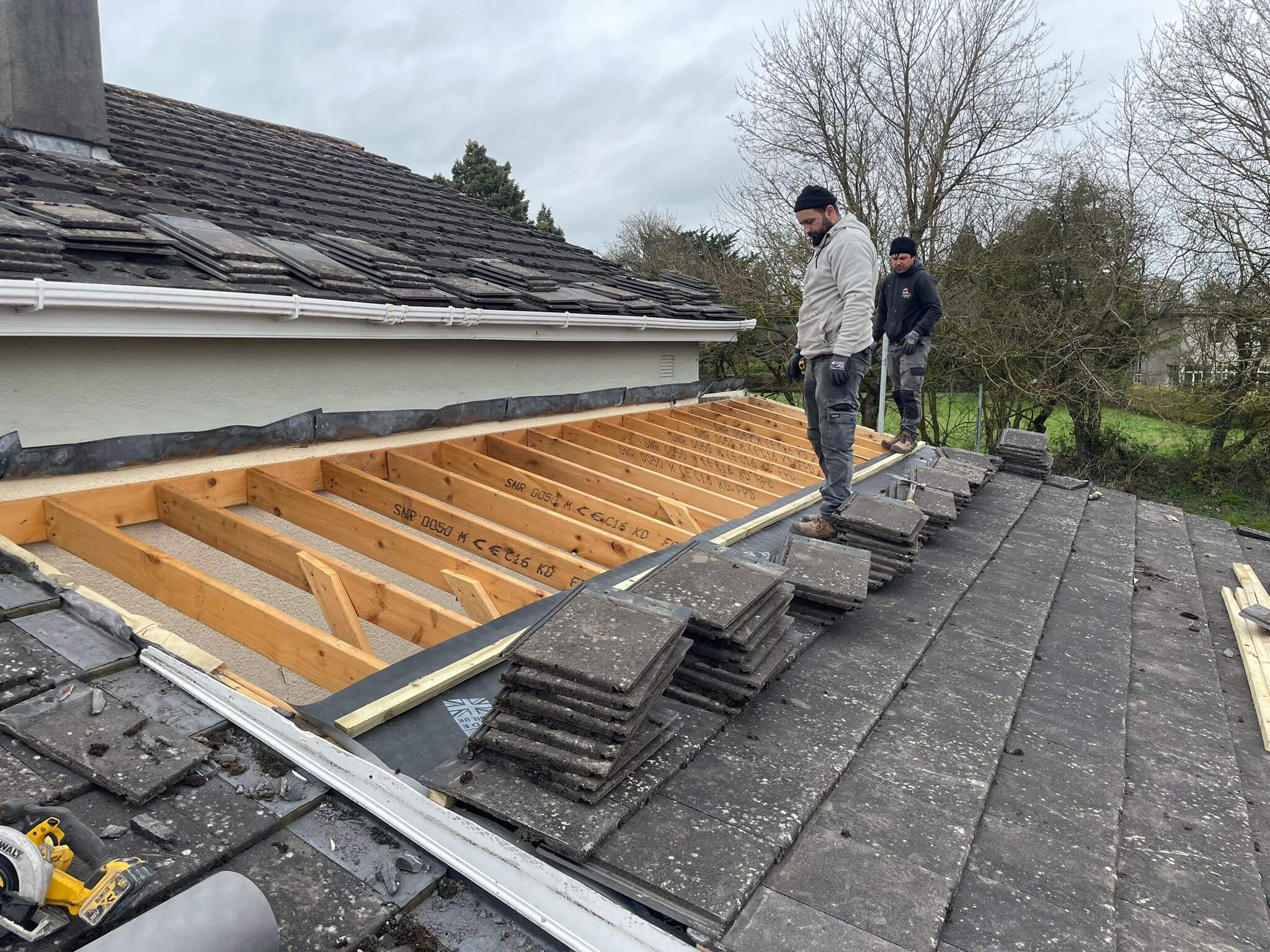
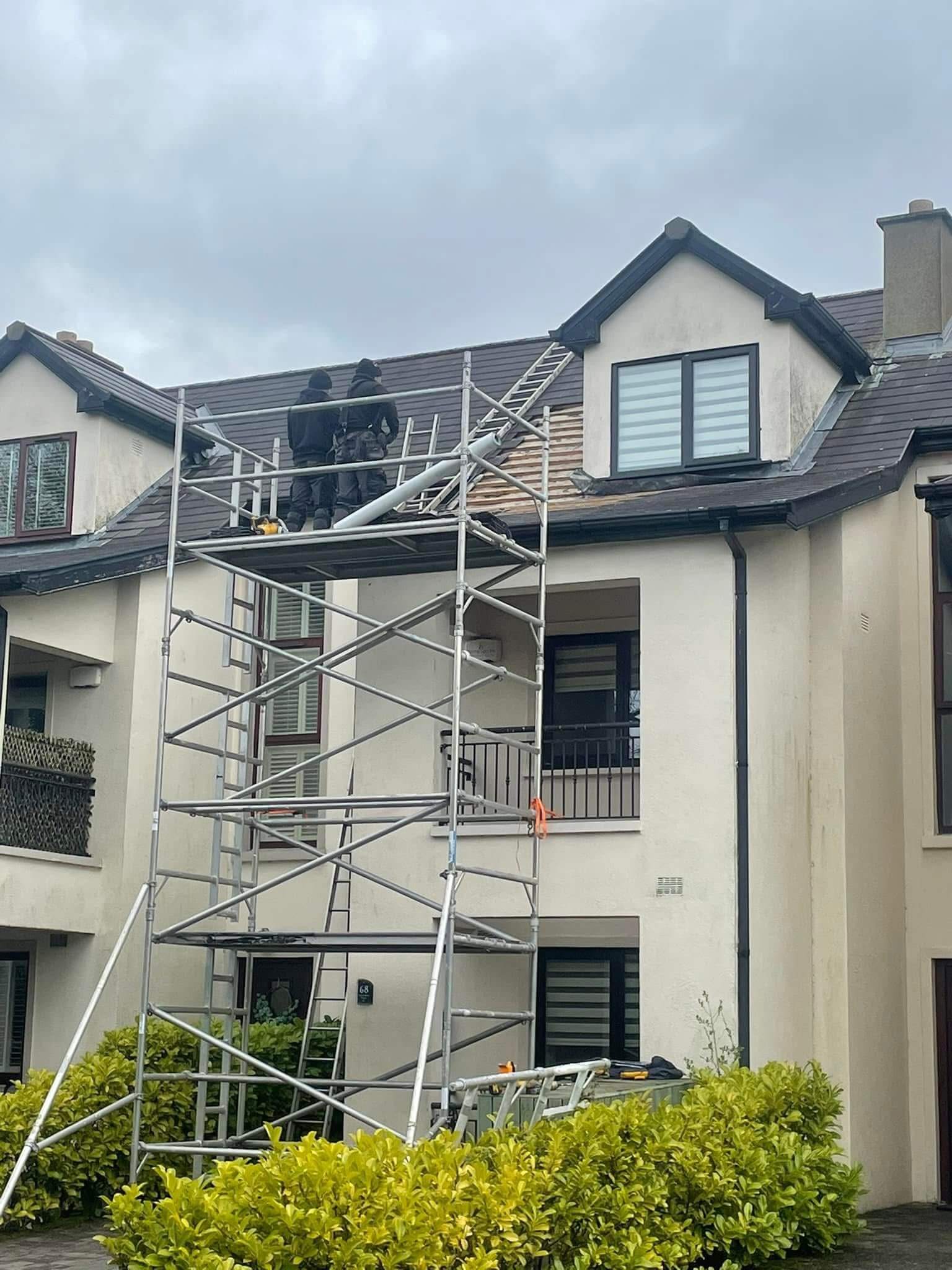
The DJ Roofing team carries out full re-slating projects across County Wicklow — stripping the existing covering completely, inspecting and repairing the timber structure beneath, laying new breathable roofing membrane and treated battens, and re-slating in natural or fibre cement slate to the homeowner's specification and budget. All lead work — flashings, valleys, soakers — is replaced as part of a full re-slate, ensuring the entire roof system is renewed rather than leaving old components in an otherwise new installation.
Real Results From Home-Owners in Wicklow!

This is one of the most common questions Sean gets asked when discussing re-slating projects across Wicklow, and it deserves an honest answer rather than a default recommendation toward the more expensive option.
Natural slate is the premium choice. Its longevity — 80–100 years when correctly fixed — is unmatched by any other roofing material. Its appearance on period Wicklow properties is authentic and appropriate in a way that no manufactured product fully replicates. Its weight means it stays put in high winds. The disadvantages are cost — natural slate is more expensive in both material and labour terms — and the variability in quality between different sources. Not all natural slate is equal, and cheap imported slate of poor quality can fail within 20 years.
Fibre cement slate — brands such as Eternit, Cembrit, and Marley — offers a more cost-effective alternative that performs well and looks considerably better on traditional Irish homes than concrete tile. A quality fibre cement slate should last 30–40 years. It is significantly lighter than natural slate, making it suitable for roof structures that might struggle to carry a full natural slate load. The visual difference between good quality fibre cement slate and natural slate is noticeable on close inspection but acceptable on most properties.
For period properties in conservation areas, or on homes where authenticity matters and budget allows, natural slate is almost always the right choice. For properties where budget is the primary constraint, or where the visual difference is less critical, fibre cement slate is a durable and sensible option.
The team gives an honest recommendation based on the specific property, its age and character, the condition of the existing roof structure, and the homeowner's budget — not based on which option generates the larger job value.
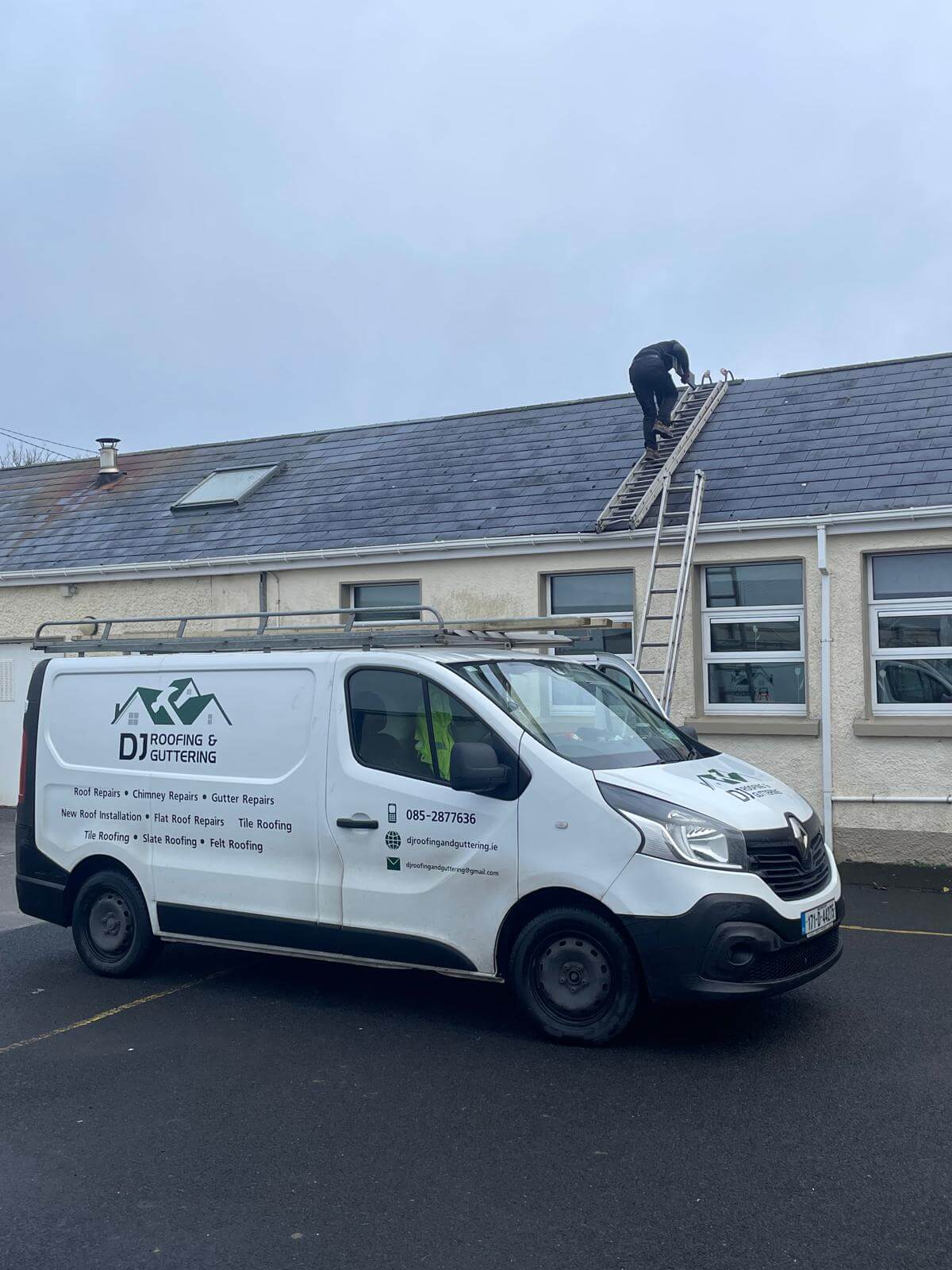
The DJ Roofing team carries out slate roof repairs and re-slating projects throughout the entire county — from the Victorian terraces of Bray and Greystones in the north, through Wicklow Town, Rathnew, Ashford, and Rathdrum, out to Arklow, Aughrim, Tinahely, and Shillelagh in the south, and across the rural uplands to Roundwood, Laragh, Donard, and Blessington.
Period properties, farmhouses, new builds, and everything in between — the team brings the same level of care and expertise to every slate job across the county.
The most reliable indicator is multiple slates slipping across different areas of the roof rather than in one isolated spot. A single area of slippage usually indicates localised damage or a specific fixing failure. Widespread slippage across the whole roof, particularly on a roof that is 50 years or older, strongly suggests nail sickness. Sean can assess this definitively during a free inspection.
In most cases, yes — though it depends on the type of slate and how unusual it is. Spanish and Welsh slates are widely available and matchable in most cases. Some older Irish slates and more unusual imported slates can be harder to source in an exact match. The team takes matching seriously and will discuss the options honestly at the inspection stage.
Individual slate replacement is a minor repair. A full re-slate on a large period property in natural slate is a significant project. The cost depends on the size of the roof, the material chosen, the extent of any structural work required, and the accessibility of the property. The inspection and quotation are always free — call Sean to arrange one.
For a like-for-like re-slate using the same material, planning permission is not typically required. If you're in a protected structure or architectural conservation area — which applies to a significant number of older properties across Wicklow — you may need to notify or seek consent from Wicklow County Council. The team can advise on this at the survey stage.
For a standard three- or four-bedroom house, a full re-slate typically takes four to seven working days depending on the size and complexity of the roof. Larger properties, more complex roof shapes, or additional lead work will extend the timeline. The team provides realistic timelines at the quotation stage.
Whether it's a handful of missing slates after a storm or a full re-slate that's been putting itself off for years — call Sean today for a free inspection and a straight, honest quote.
Call 040450003 No call-out fees. No hidden charges. No hard sell.
DJ Roofing Wicklow offers a comprehensive range of roofing services for homeowners and landlords throughout County Wicklow.


DJ Roofing Wicklow — honest, reliable roofing across County Wicklow. Call Sean directly for a free quote.

Copyright © DJ Roofing Wicklow. All Rights Reserved.
Web Design by The Roofing Marketing Experts