
Bray's coastal location and its significant stock of older housing create a combination of factors that make chimney maintenance more important here than in most Irish towns. Understanding those factors helps explain why chimneys in Bray deteriorate the way they do — and why catching problems early matters so much.
Bray has more period properties with active chimneys than almost any town in Wicklow. The Victorian and Edwardian terraces that define much of Bray's character — the streets around Strand Road, Herbert Road, Dargle Road, Vevay, Putland Road, and the older residential areas close to the town centre — were built with tall, prominent chimney stacks that served multiple fireplaces. Many of these stacks are now 100–120 years old. Some have been well maintained. Many have not been seriously inspected since the fireplaces they served were converted or sealed off decades ago. A chimney that looks intact from the ground can be causing significant water ingress at roof level while the homeowner is completely unaware.
Bray's coastal salt exposure attacks chimney mortar faster than inland locations. The easterly winds that come off the Irish Sea carry salt that is mildly acidic — and that salt works on the lime and cement mortar between chimney bricks, accelerating erosion significantly compared to equivalent chimneys in sheltered inland locations. A chimney in Bray town centre may need repointing 20–30% sooner than an identical chimney in a sheltered rural Wicklow location. On seafront and coast road properties with direct eastern exposure, the deterioration is even more pronounced.
Bray's rainfall puts chimneys under constant pressure. The town's coastal position means it receives above-average rainfall — and every rainfall event is an opportunity for water to find its way through failed mortar joints, cracked flaunching, or lifted flashing into the roof structure and chimney breast below. The cumulative effect of persistent water ingress in a damp coastal environment is mould growth, timber rot, and plaster damage that builds quietly for months before it becomes visible.
Frost cycles attack Bray chimneys every winter. Despite its coastal position, Bray experiences meaningful frost cycles through the winter months — and freeze-thaw cycles are the primary mechanical force that opens up hairline cracks in mortar, flaunching, and brickwork into the gaps through which water enters. Every winter that passes without attention on a deteriorating chimney accelerates the damage for the following year.

I keep the process simple and transparent because that's what I'd want if someone was coming to work on my own home.
Real Results From Home-Owners in Wicklow!

Having worked across Bray regularly for years, the DJ Roofing team sees certain chimney problems come up consistently across different parts of the town:
Victorian and Edwardian terraces around the town centre and seafront area — tall, multi-pot chimney stacks with original lime mortar that has eroded significantly, flaunching that has cracked and separated from multiple pots simultaneously, and lead flashings that are 50+ years old and have reached the end of their serviceable life. These stacks frequently need a comprehensive programme of work rather than a single targeted repair.
1970s and 1980s semis across Ballywaltrim, Fassaroe, and Oldcourt — chimney stacks built with cement mortar that has cracked under freeze-thaw cycles, flaunching failures on pots that were never properly maintained, and lead flashings that were installed to a lower specification than period properties and have deteriorated accordingly. These are generally less complex repairs than period properties, but they're no less important.
Converted properties with sealed or removed fireplaces — chimneys that are structurally intact but no longer in active use, where birds have nested in the open flue, where cold draughts are coming into rooms through the sealed fireplace opening, or where the stack itself is deteriorating without anyone noticing because the fireplace below is plastered over.
Coast road and seafront properties — chimneys in direct eastern exposure that show accelerated mortar erosion, lead surface degradation, and flaunching cracking at a rate measurably faster than equivalent stacks in the sheltered streets on the western side of the town.

The DJ Roofing team carries out chimney repairs across all parts of Bray — from the Victorian terraces of the town centre and seafront to the established residential areas and newer estates throughout the town. This includes Strand Road, Herbert Road, Dargle Road, Vevay, Putland Road, Ravenswell, Killarney Road, Boghall Road, Ballywaltrim, Fassaroe, Oldcourt, Brennanstown Road, and all surrounding streets and estates throughout the town.
The team also covers neighbouring areas — Shankill, Enniskerry, Kilmacanogue, and all properties along the north Wicklow corridor between Bray and Greystones.
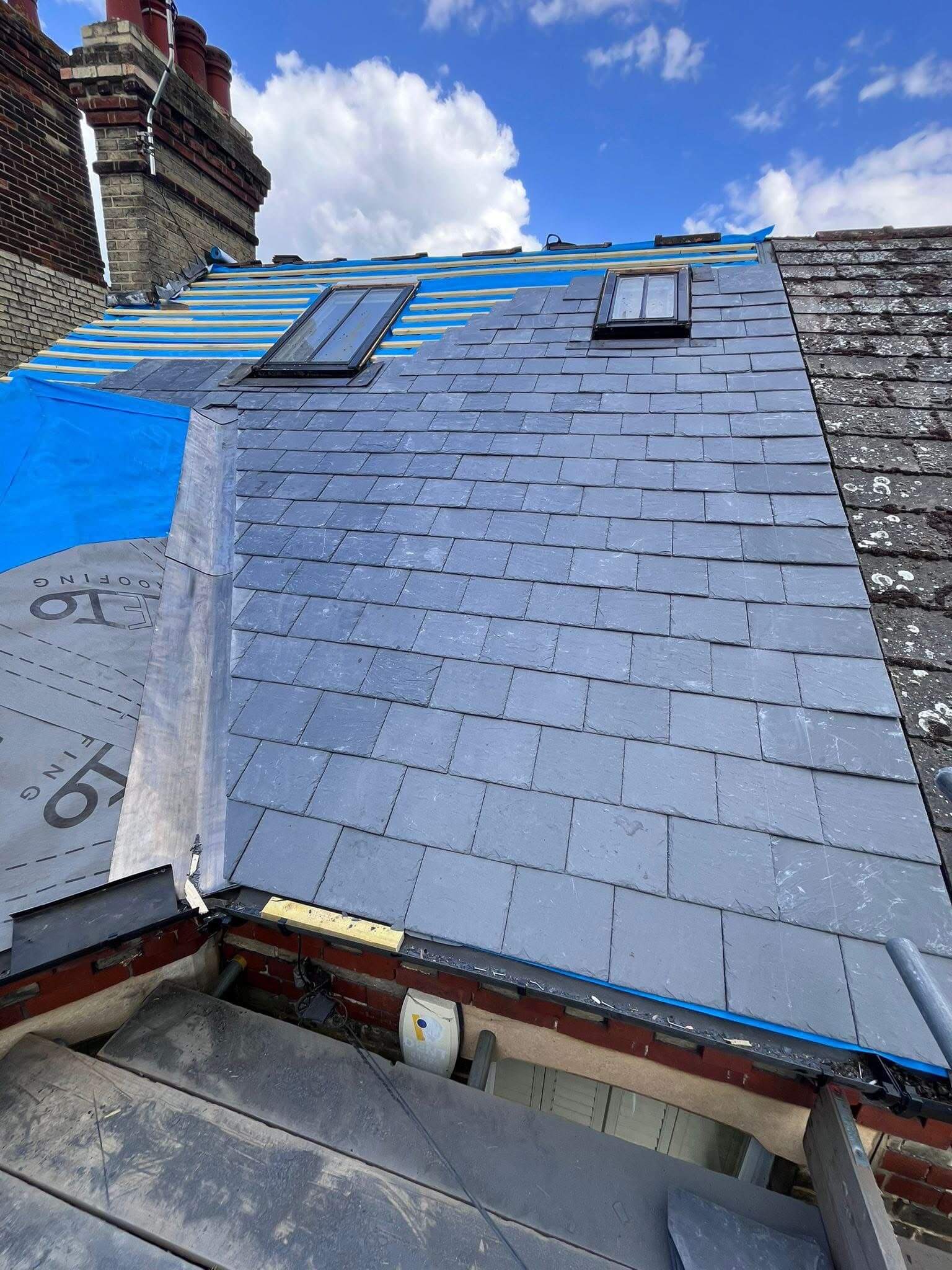
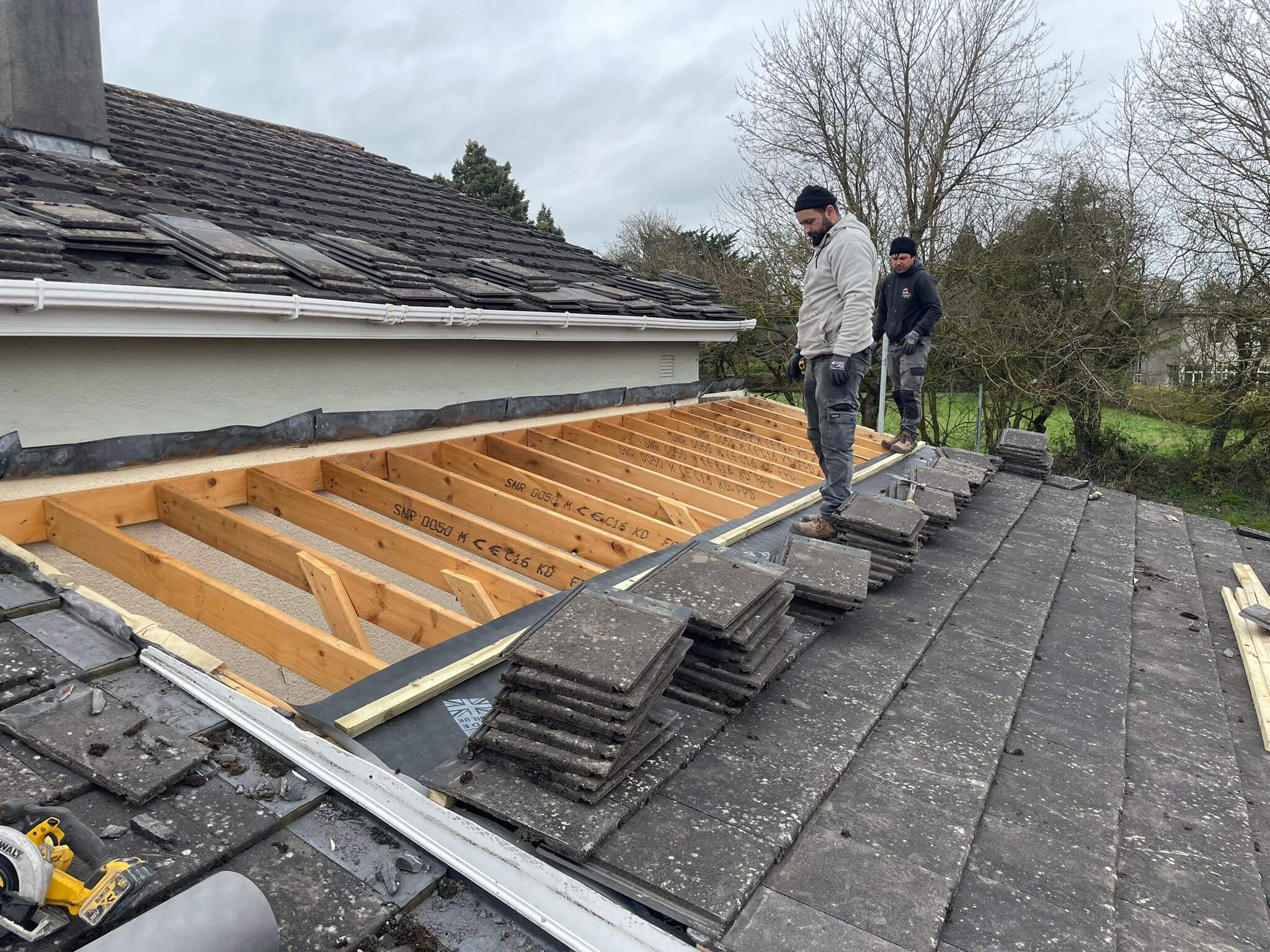
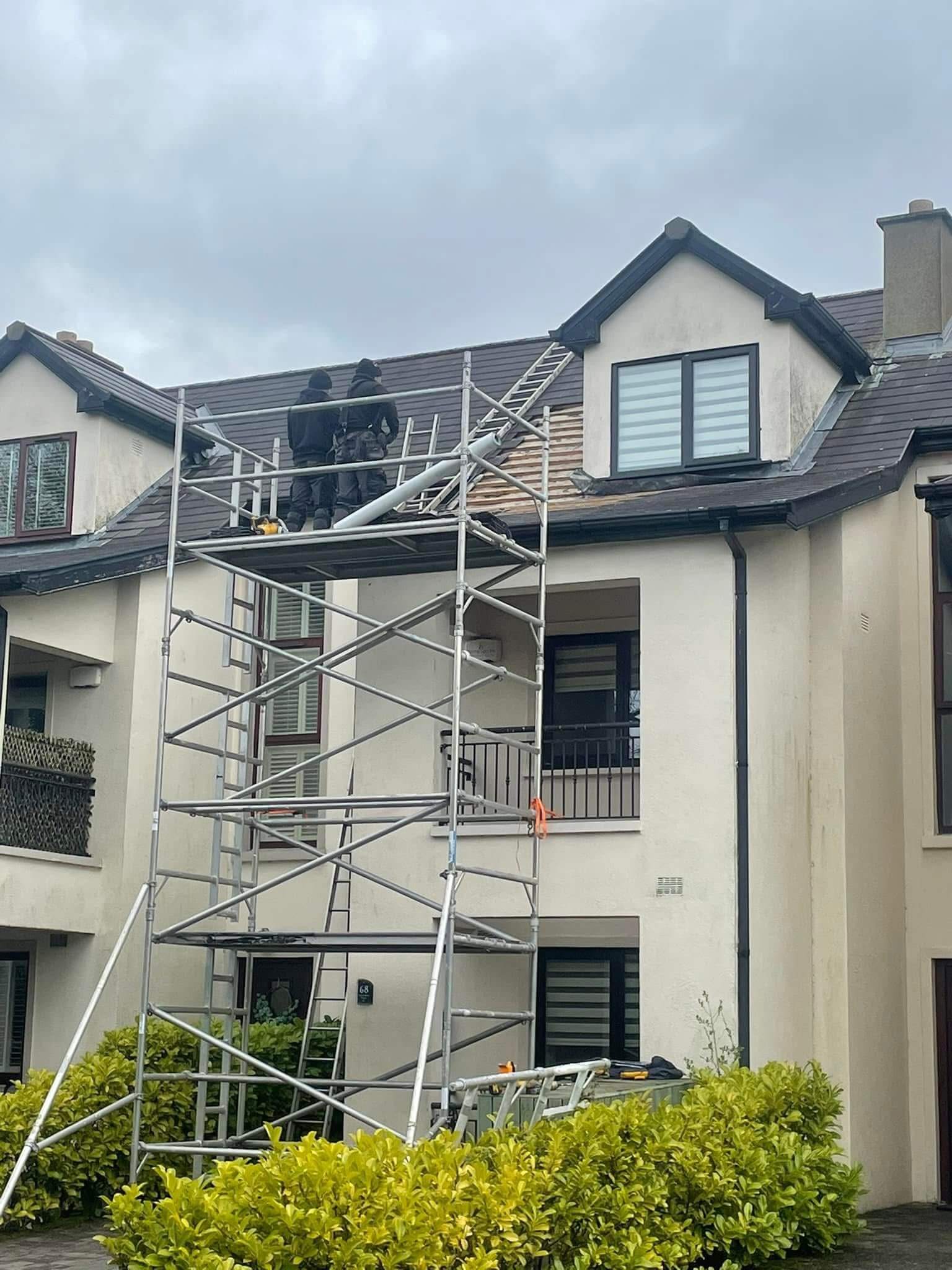
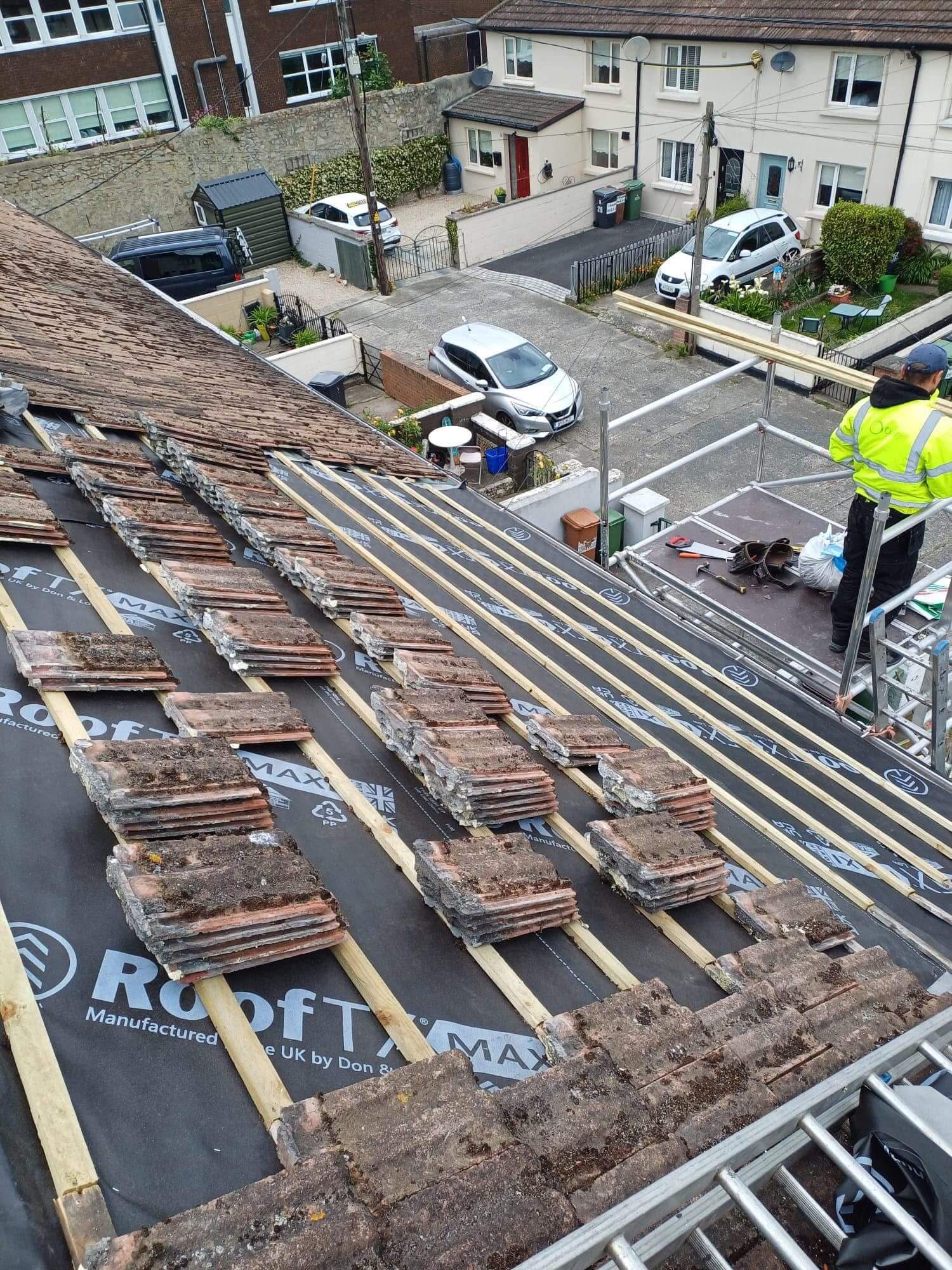
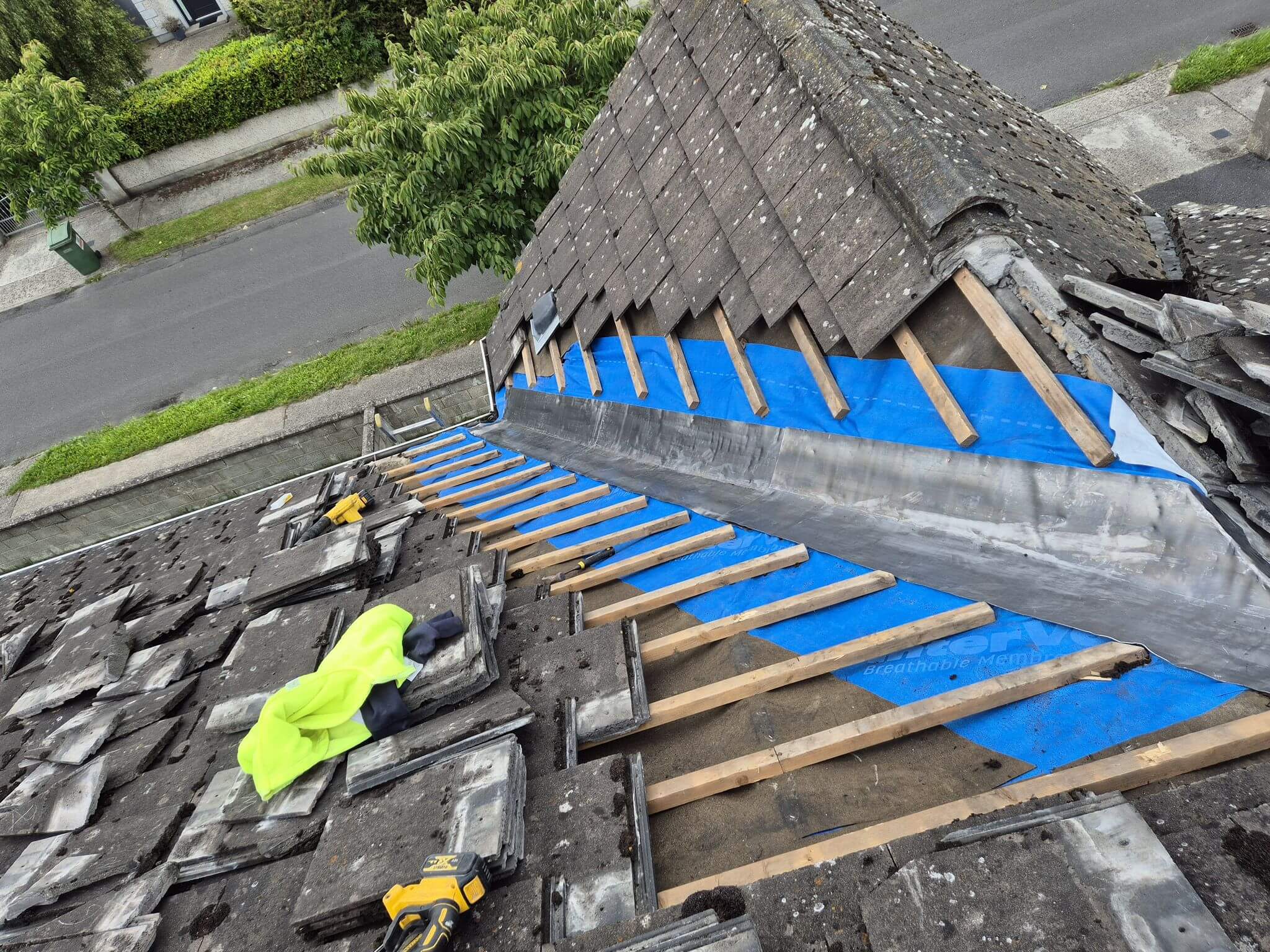
Chimney repointing in Bray typically costs €300–€800 depending on the height and size of the stack and the extent of the mortar erosion. Lead flashing repair typically costs €300–€700. Flaunching repair or replacement costs €250–€500. Sean always inspects and quotes before any work starts — so you know exactly what's involved.
Yes — measurably so. The salt air on Bray's eastern and coastal properties accelerates mortar erosion compared to equivalent chimneys in sheltered inland locations. Properties on the seafront and coast road should have their chimneys inspected more frequently than those in more sheltered positions.
Yes, and this is important. Victorian and Edwardian properties in Bray were built with lime mortar, which is softer and more flexible than modern Portland cement. Repointing an older Bray chimney with hard cement causes brickwork damage as the two materials move at different rates. The team uses the appropriate mortar specification for the age and construction of each chimney — this isn't a minor detail, it's the difference between a repair that lasts and one that causes further damage.
For standard inspections and quotes, Sean is typically out within a few days. For situations where active water ingress is causing damage — water dripping into a room, visible structural movement in the stack — call Sean directly on 040450003 and the team will prioritise getting to you.
It depends on the height of the stack and the nature of the work. Some chimney repairs can be carried out safely from a roof ladder. Full repoints, rebuilds, and work on the tall stacks common on Bray's period terraces require scaffolding. The cost of scaffolding is always included in the quotation upfront — no additions to the bill after work starts.
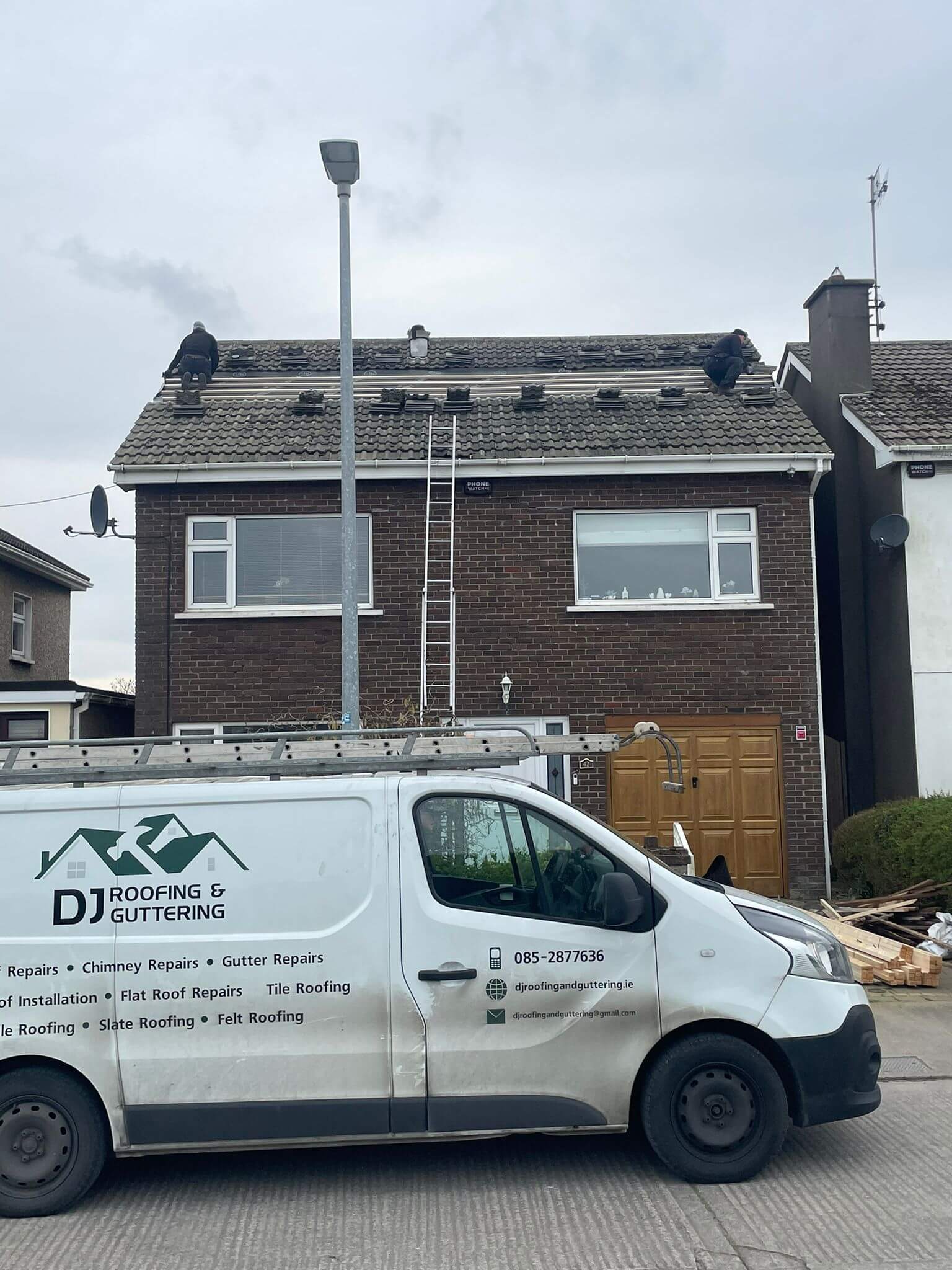
Don't leave a chimney problem to develop through another wet Wicklow winter. Water damage from a failing chimney compounds faster than almost any other roofing issue — and in Bray's coastal environment, the combination of persistent rain and salt air means damage builds quickly once it starts.
Call 040450003 No call-out fees. No hidden charges. No hard sell.
DJ Roofing Wicklow — honest, reliable roofing across County Wicklow. Call Sean directly for a free quote.

Copyright © DJ Roofing Wicklow. All Rights Reserved.
Web Design by The Roofing Marketing Experts